Dutch regulator pursues €420000 penalty over Polymarket
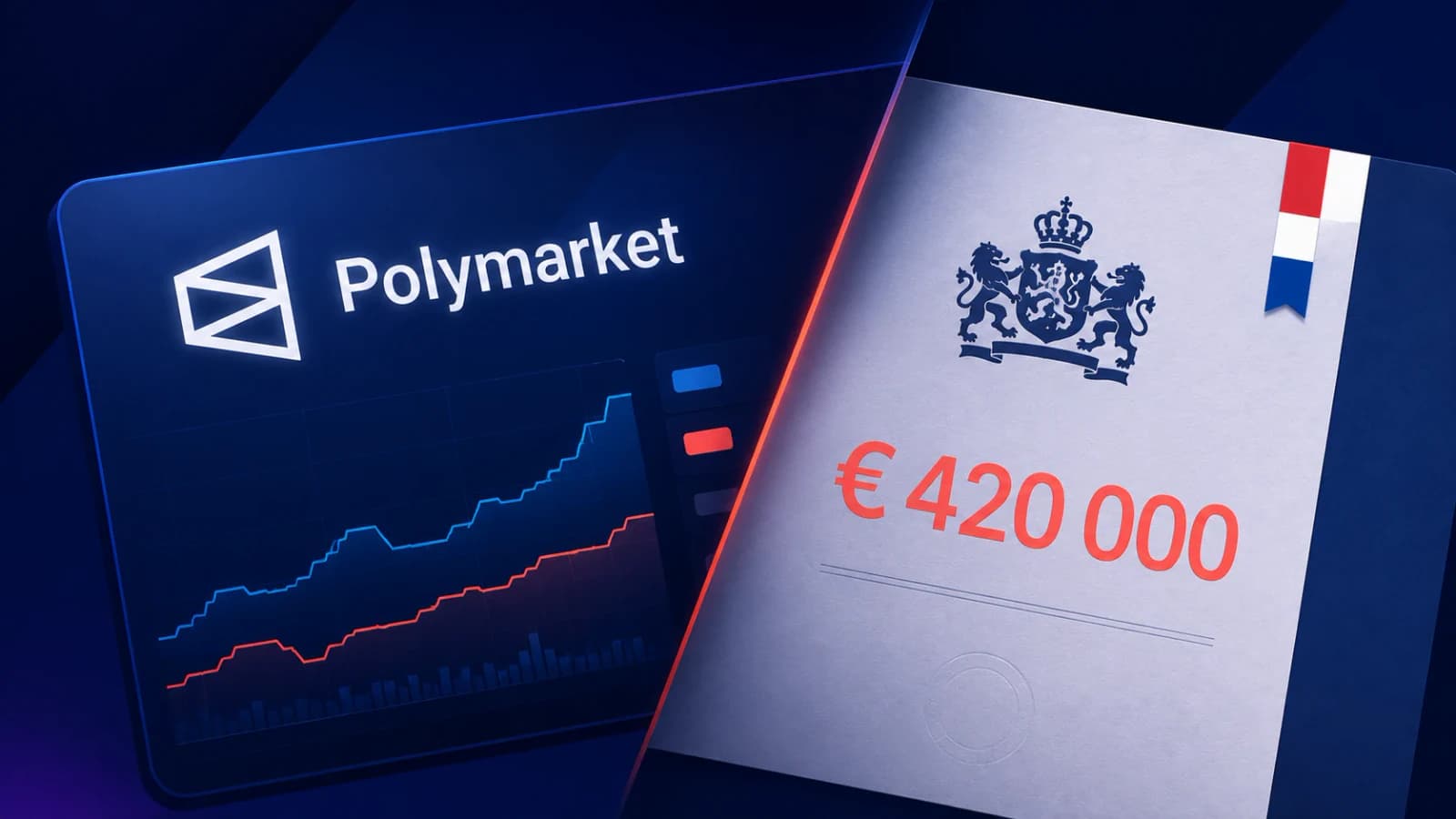
The Dutch Kansspelautoriteit is proceeding with collection of a €420000 periodic penalty from the company operating Polymarket. It says the company breached an order concerning unlicensed gambling offered in the Netherlands. The case tests the treatment of prediction markets under Dutch law, with judicial review still available.
The enforcement decision
The regulator says Adventure One QSS Inc. offered games of chance to people in the Netherlands under the Polymarket name without the licence required for the Dutch market. Its case page, published on 8 July 2026, says the company breached an earlier order subject to a periodic penalty. The Ksa concluded that a €420000 amount had therefore been forfeited and said it would proceed with collection. That is an enforcement decision by one national authority, not a global ruling on every event contract or every prediction platform.
A decision on the company’s objection was dated 23 June, and the regulator notes that an appeal can still be brought before a court. The regulator’s decision remains open to judicial review. Readers should also distinguish a periodic penalty intended to compel compliance from a conventional fine: both carry financial consequences, but they arise through different legal mechanisms and should not be collapsed into the same headline.
How jurisdictions classify prediction markets
Prediction markets present themselves as tools for aggregating information. Participants buy positions linked to outcomes such as elections, economic releases or sporting events, and the changing price can be read as a crowd estimate of probability. Gambling regulators may look past that description to the underlying transaction: money is committed, the result depends on an uncertain event, and a correct position can return more than the stake. Whether those features create a regulated bet, a financial instrument or another category depends on the law and facts in the relevant jurisdiction.
That jurisdiction-by-jurisdiction analysis explains why availability on the internet is a poor guide to legality. Countries differ on which events may be traded, who may offer the product, what consumer protections are required and which agency has authority. A platform permitted or tolerated in one market can face licensing action in another, while financial or electoral rules may apply alongside gambling legislation. The Dutch decision cannot determine the status of these products in other jurisdictions.
Licensing and market access
Platforms need to establish their legal basis for serving each market. Event selection, onboarding, payment acceptance, advertising and account controls all need to reflect the rules of the country being served. Payment companies and affiliates also need a clear view of licensing status before enabling deposits or promotion. For users, a polished interface and global brand do not by themselves prove that a service is authorised locally. The next meaningful developments will come from any court appeal and from how other regulators explain the boundary between forecasting, trading and gambling in their own statutes.