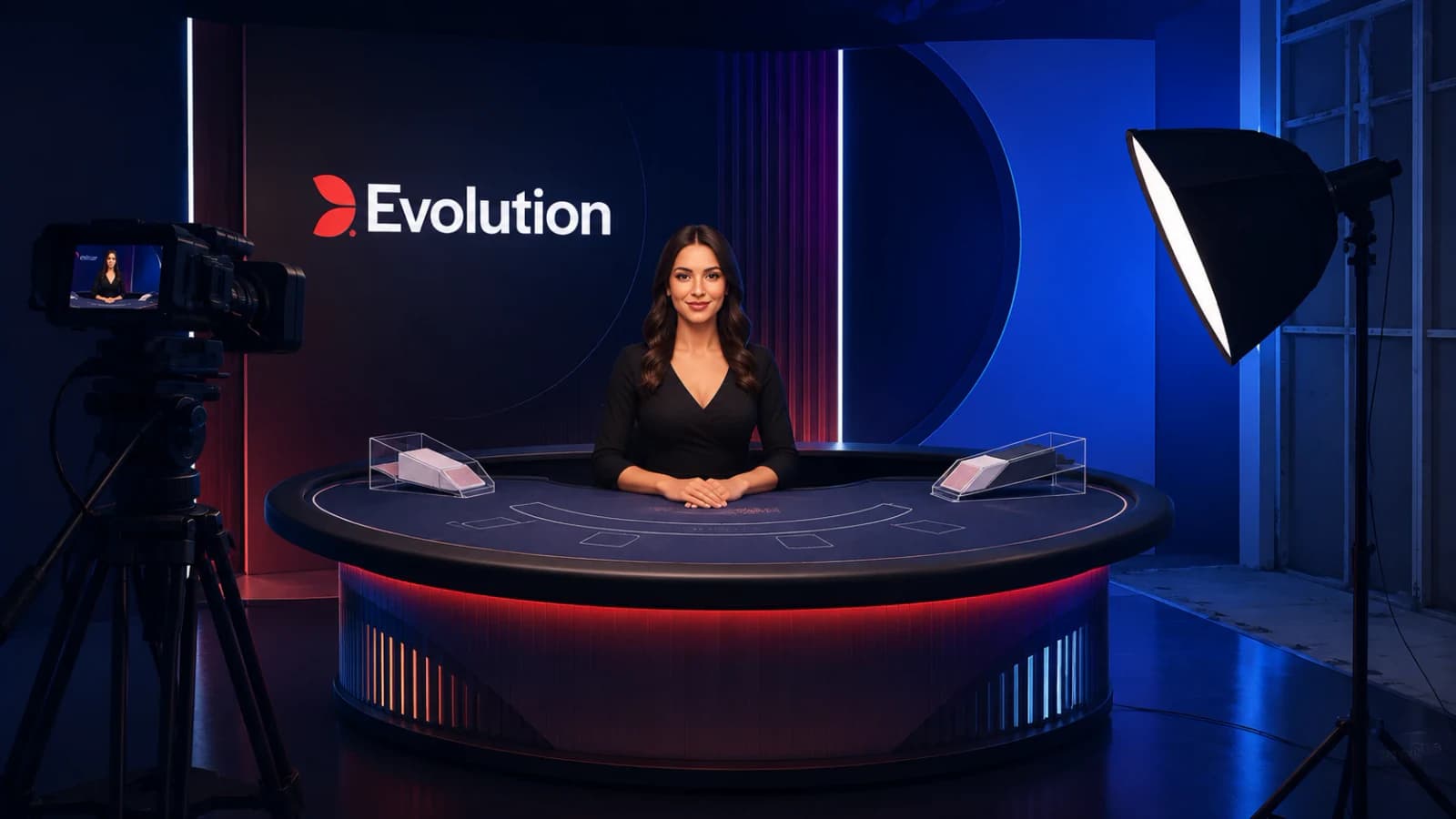
Bibkins-neon and Evolution prepare a live studio
Bibkins-neon and Evolution are building a dedicated live studio. Work on lighting, sound and camera positions is being tested in the stream players will see, including on smaller screens. Dealer rehearsals and technical checks will precede the first limited sessions.
Designing for the stream
The studio layout is being planned around the camera views. Lighting is balanced to keep cards, chips, dealer gestures and table prompts distinct without flattening the atmosphere. Camera positions follow the natural sequence of a round, while restrained surfaces and backgrounds reduce visual noise when the stream is viewed on a phone or in a compact desktop window.
Acoustic treatment is intended to keep the dealer’s voice clear while softening the machinery and movement of a working floor. The set uses one coherent visual language across tables, but the composition leaves enough space for game-specific information and market-required messages. Colour and motion are being judged in the actual stream rather than only on the physical set, since compression and a smaller display can change what feels calm or legible. Our product team is reviewing overlays, viewing angles and interaction states alongside Evolution’s broadcast specialists before any session reaches players.
Dealer rehearsals and device tests
Evolution’s production team is preparing dealers for pacing, table routines and the small recovery cues needed when a card, camera or audio path needs attention. Rehearsals also test how hosts acknowledge a pause without making it feel larger than it is, and how the control room returns the broadcast to its normal rhythm.
On our side, testing follows the complete player journey: entering the lobby, opening a stream, reading game information, changing orientation and reconnecting after a network interruption. Picture and sound are checked across supported devices and realistic connection conditions. Reviewers are looking for small points of friction as well as obvious faults: a prompt hidden by the table edge, an overlay arriving too late, or a host cue that does not match what the player can see. Operations teams are also exercising escalation paths so that a table can be paused, reviewed or removed from the schedule when quality or procedural checks are not met.
A staged opening
Internal rehearsals will be followed by limited sessions. The schedule will expand once broadcast, game and operational checks hold up under live conditions. The final table mix, opening sequence and availability will vary by market, device support and local requirements. We will publish eligible games and session details in the lobby as each stage opens, using early operating feedback from players, dealers and the control room to tune pacing, presentation and scheduling before expanding further across the floor.